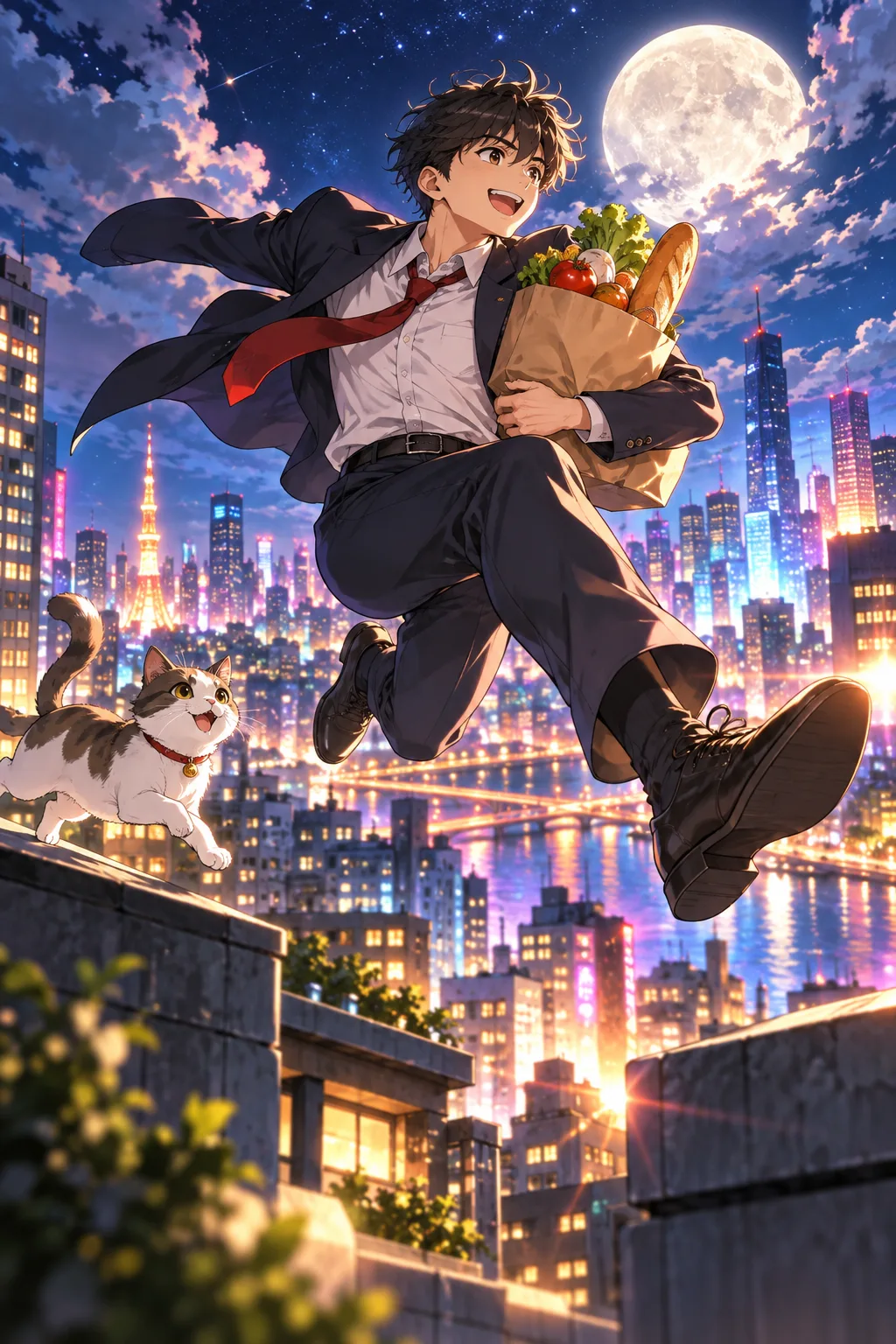
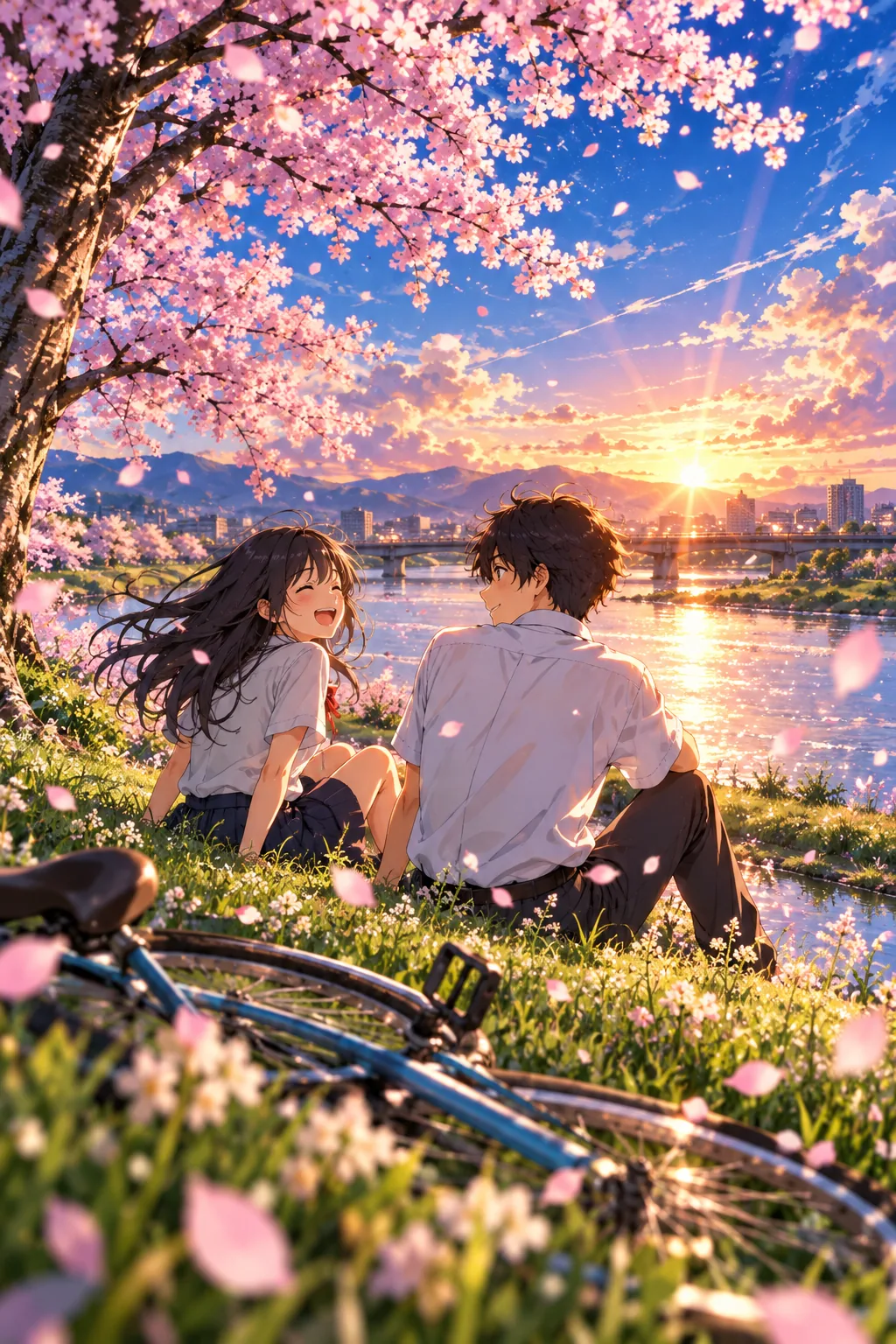
Why your life story works so well as anime
Anime has a way of making ordinary things feel enormous. A school corridor, a train platform, a bowl of noodles after a long shift: the genre treats everyday moments as if the whole world depends on them. That is exactly why so many fans who binge on Crunchyroll or wait for news about Black Clover season 2 also catch themselves narrating their own lives in that voice. The exam you nearly failed, the friend who moved away, the job interview you walked into shaking.
Stories move between media all the time. Games become series, series become films, and a new Street Fighter movie reminds everyone that a familiar story can be retold in a completely different form. Adapting your own life is the same move on a smaller scale. You already have the source material. What you need is a structure that makes it feel like an episode, and pictures that look the part.
Which chapter of your life should become the episode?
Do not try to adapt your whole life. Pick one arc with a clear before and after. Good candidates are school days, especially a last year, a club, a rivalry or a summer festival; a first job told as a hero's journey, where the newcomer in an oversized suit slowly becomes the person others ask for help; or a friendship arc, two kids on bikes who drift apart and find each other again years later.
A useful test: can you say in one sentence what changed? 'I arrived in a new city knowing nobody and left with a best friend' is an episode. 'My twenties' is a whole series. If you have several arcs, make several short films. Each one is easier to write, cheaper to draw and more likely to be watched to the end. Small stakes are fine. Anime has made entire seasons out of a cooking club. If the moment mattered to you, it will carry the film.
How to write a story in anime structure
Most anime arcs follow a shape you can borrow. Start with the ordinary world: one or two shots that show daily life before anything happens. 'Every morning I took the 7:12 train and sat in the same seat by the window.' Then the challenge: something breaks the routine. 'On my first day, my manager handed me a project nobody else wanted.'
Next comes the training montage, the part anime does best. Compress weeks or months into three or four quick shots: late nights at a desk, a notebook filling up, a small win, a bigger failure. Keep each narration line short so the pictures can breathe. Then the turning point, the scene where the hero finally gets it right, or loses but learns something. End with a quiet shot that mirrors the opening, the same train seat or the same rooftop, so the viewer feels how far the character has come.
Write in the first person and keep sentences spoken, not written. Read your text out loud once. If you run out of breath, split the sentence. A short film of this kind usually works well with roughly 8 to 15 shots. Keep the full arc on one page, so every shot earns its place.
Keeping your anime character consistent from shot to shot
Nothing breaks the illusion faster than a hero whose hair changes colour between scenes. After you submit your story, showmylife splits it into shots and lists the characters, places and objects it found. Review that list before any pictures are drawn: describe hair, height, a signature jacket, a school uniform, the battered bicycle. These details are reused in every picture, which keeps the cast consistent across the film.
If you want to make yourself an anime character, add a reference photo so the main character resembles you. The same works for a friend or a pet, but only with photos you have permission to use. Ask before you turn a classmate into a supporting character, and consider changing names if the film will be shared publicly.
Visual signatures help too. Give each character one recognisable item, such as a red scarf, a grocery bag or a pair of headphones. Mention it in the story so it shows up in the pictures where it matters. Leave out side plots that do not touch the main change; they can become their own episode later.
Choosing a narration voice that fits the tone
The voice is your opening theme. A calm, warm voice suits a nostalgic friendship story; a brighter, faster voice suits a comedy about surviving your first job. showmylife offers 21 narration voices, including English, French, German, Japanese, Korean and Chinese voices, plus multilingual voices that read most languages. A gentle voice also softens a sad turning point, while an energetic one keeps a comedy moving.
The narration reads your text exactly as written, with no automatic translation. If you want the film narrated in Japanese for that authentic feel, write or paste the Japanese text yourself. Many people keep the narration in their own language and let the anime style do the work. Listen to a couple of voices with your first two shots before deciding.
Subtitles matter for anime fans, who are used to reading them. You can set font size, colour and background per shot, or apply one look to all shots. White text with a soft dark background is a safe choice over bright skies and cherry blossoms. Keep subtitle lines short, two lines at most, so they never cover a character's face.
Is this an AI anime video generator or an illustrated film?
It is worth being clear. showmylife does not create moving animation, lip sync or motion video. It produces an illustrated story film: anime-style still pictures, one per shot, played in sequence with narration and subtitles. Think of a storyboard or a visual novel rather than a broadcast episode. For a cosy or nostalgic story, that slower rhythm often suits the material better than constant motion would.
That format has real advantages for a personal story. Each picture can be reviewed, regenerated or replaced with your own upload, and the narration can be rewritten line by line before export. If one key visual is not right, such as the rooftop at sunset, you redraw that one shot instead of starting over.
Cutting a vertical version for sharing
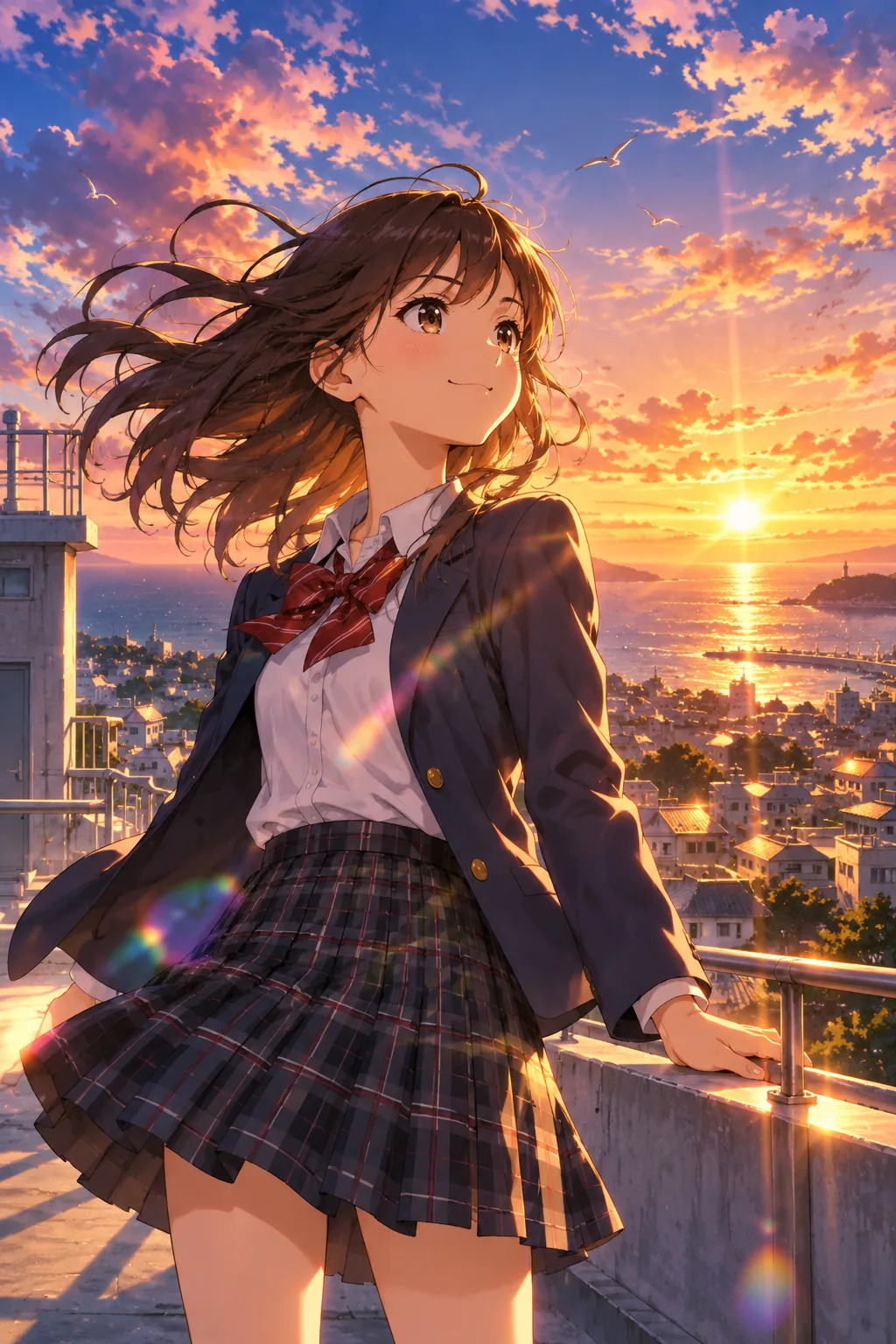
Most people will watch your episode on a phone, so export in 9:16 vertical for Reels, Shorts or a messaging status. Anime key visuals work well upright: a character on a rooftop, a figure leaping between buildings, cherry blossoms falling from the top of the frame. Use 16:9 for a laptop screen or a group watch, and 1:1 if you post to a square feed.
Keep the vertical cut tight, ideally under a minute. Open on the strongest picture, not the slowest. Once your first anime arc is done, the same approach works for other stories, from a birthday tribute to a travel diary. Narration, subtitles and MP4 export cost no credits, so you can try several cuts of the same film.