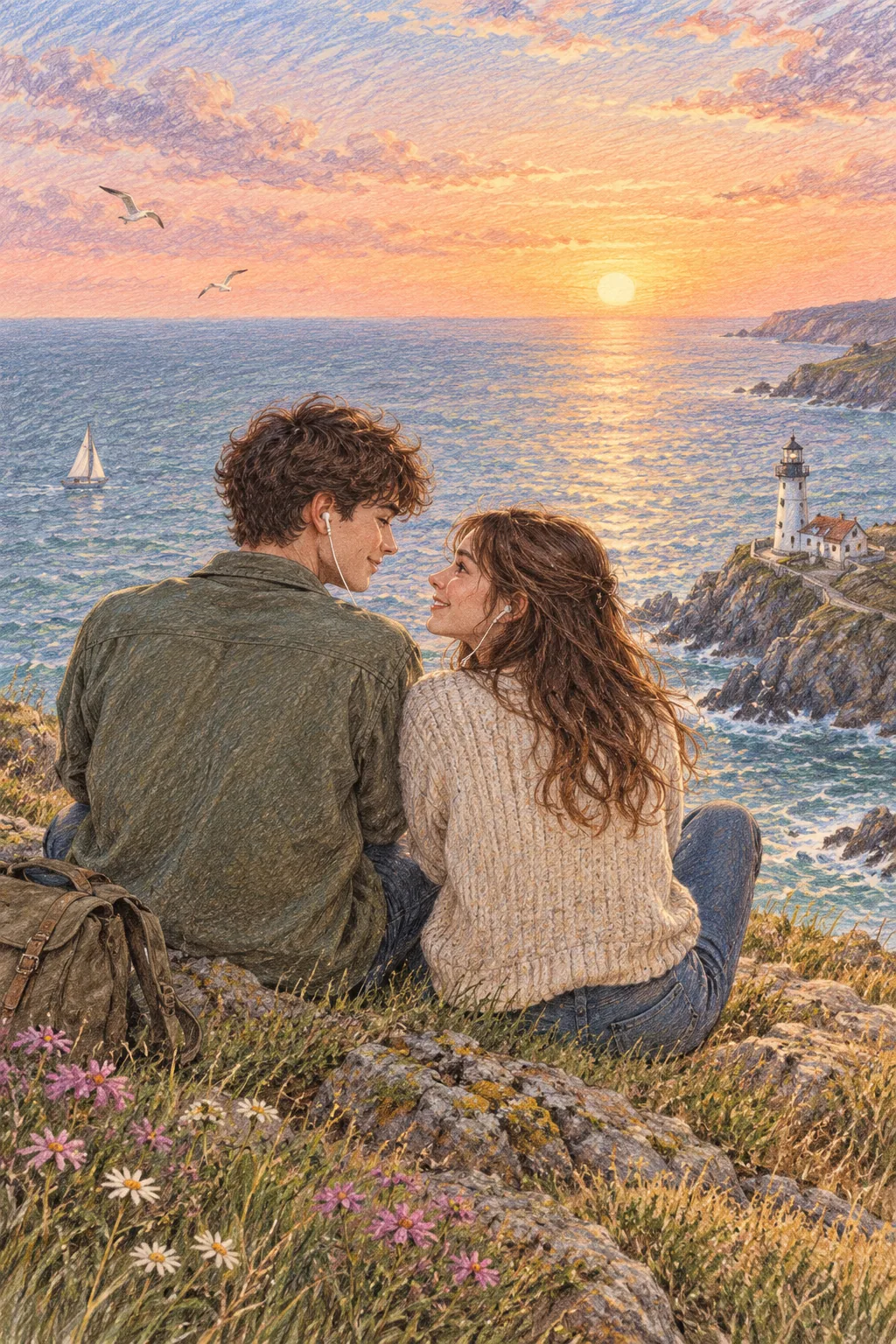
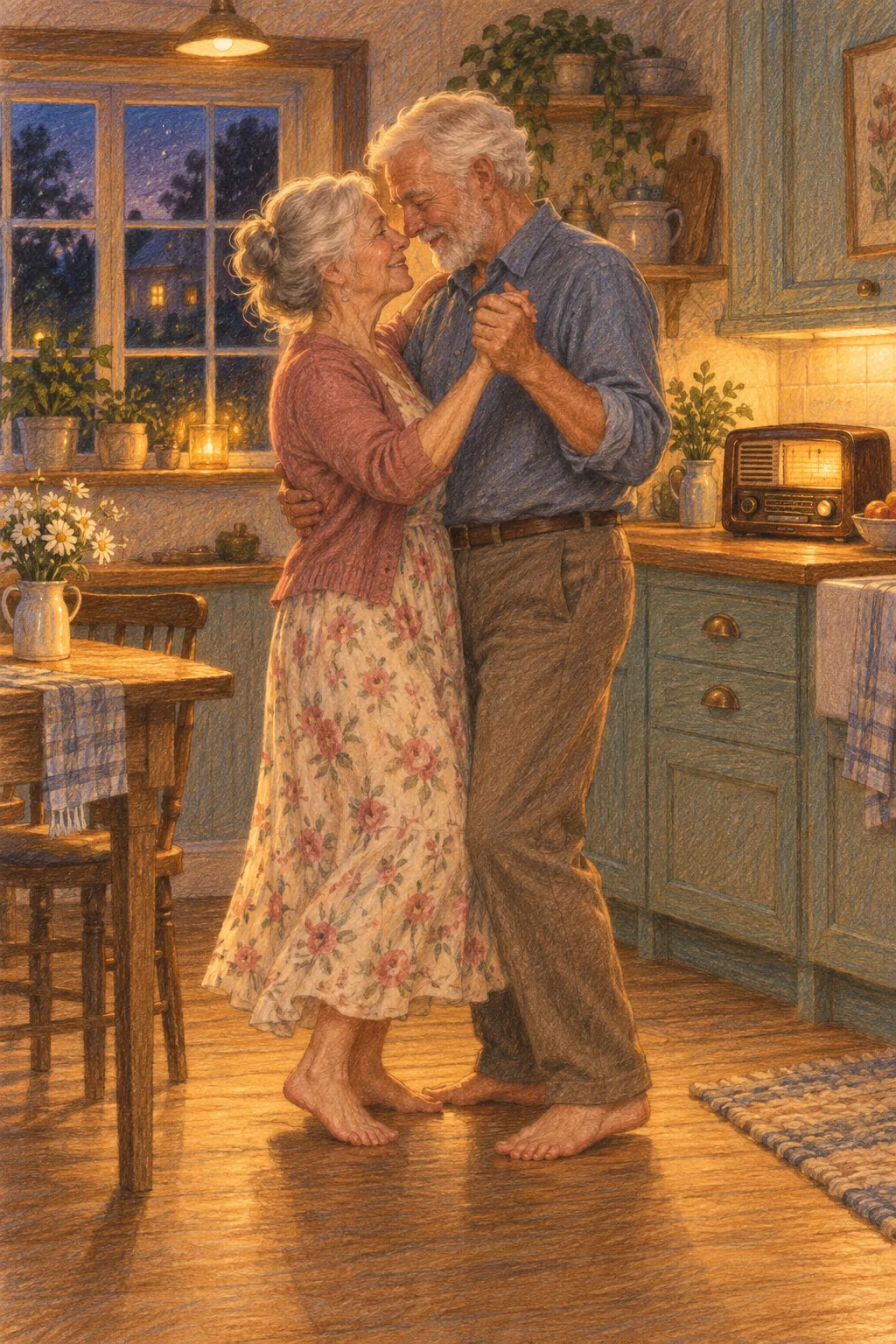
Why a how-we-met video makes such a personal anniversary gift
Most anniversary gift ideas are things: flowers, a watch, a weekend away. They are lovely, but they say 'I thought of you' rather than 'I remember us'. A how we met video does the second. It takes the story the two of you have told at every wedding and every dinner party and turns it into something you can actually watch together.
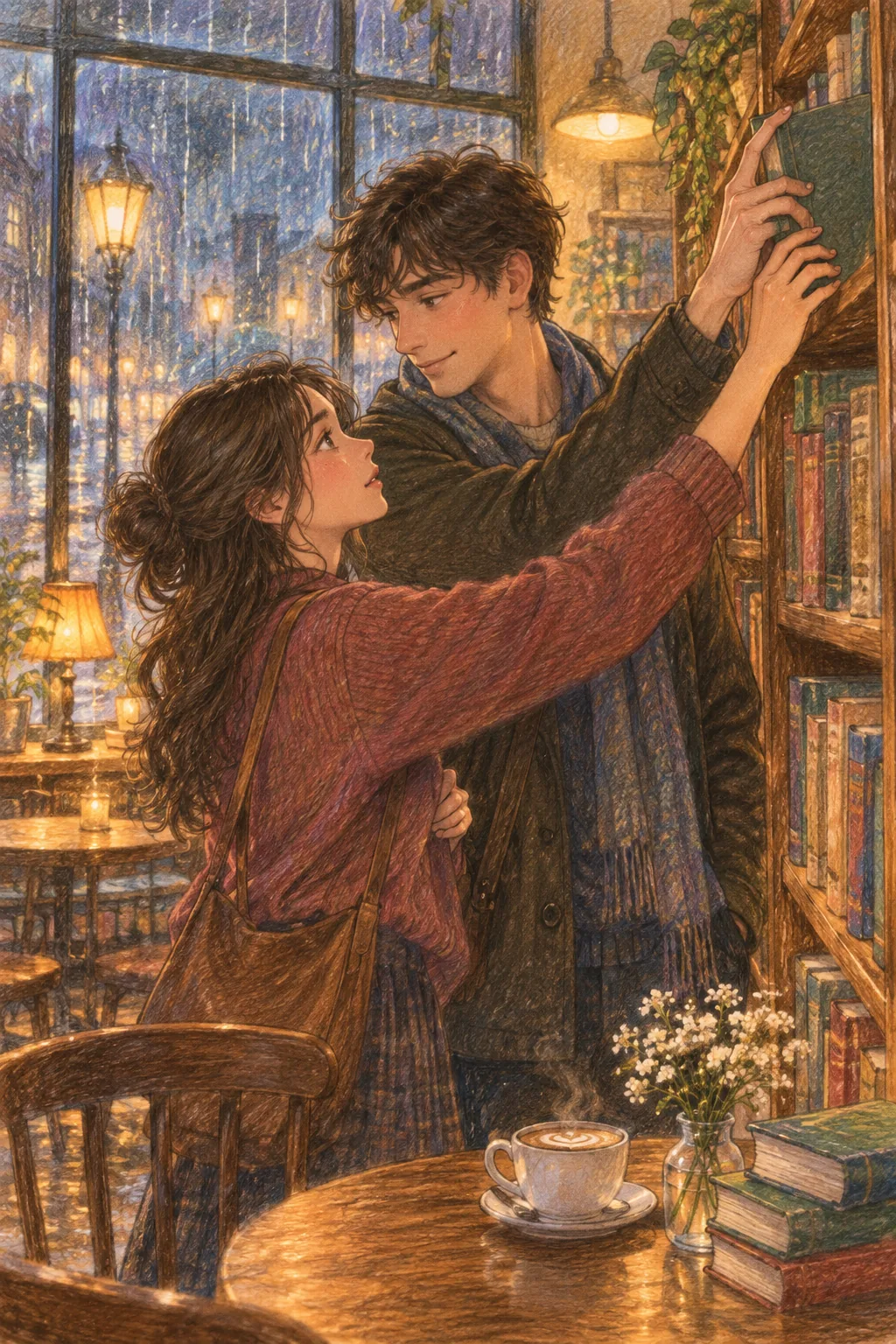
What makes it personal is that the raw material is yours. Nobody else knows that you missed the last bus on your first date, or that the restaurant you planned to go to was closed and you ended up eating chips on a harbour wall. Those small, specific details are exactly what a love story video maker needs to draw good pictures, and exactly what makes your partner laugh or cry when they see them.
With showmylife you write the story in your own words, the AI turns it into an illustrated storyboard with the two of you drawn consistently from scene to scene, and you add narration and subtitles. No old footage is needed.
How to structure your love story: four chapters that always work
If you are staring at a blank page, use four chapters. First, how you met: where you were, what the weather was like, what one of you said. Second, the first trip or first big adventure together, the moment it started to feel like a 'we'. Third, a hard time you got through, a move, a long distance year, an illness in the family, a tiny flat with a leaking roof. Fourth, today: an ordinary scene from your life now, like Sunday breakfast or the dog asleep between you on the sofa.
The hard-times chapter is the one people are tempted to skip, and it is often the one that makes the film. You do not need to go into private detail. A single line such as 'That winter we had one heater and two jobs between us, and somehow we laughed more than ever' is enough.
Give each chapter two to four short paragraphs. A finished story of 300 to 600 words usually becomes a film of around 8 to 15 shots, which plays comfortably in a few minutes.
Anniversary video ideas for different milestones
Different wedding anniversaries suggest different angles. For a first anniversary, traditionally the paper one, a short film about the year leading up to the wedding fits nicely, and a story written on paper first is a fun nod to the theme. For a fifth, the wood anniversary, think about the home you built: the first flat, the furniture you carried up four floors, the garden that never quite worked.
For a tenth anniversary, a relationship timeline video that jumps through the years works well, one or two shots per year. For a silver or golden anniversary, the film is often made by children or grandchildren for their parents. In that case, interview the couple first, or use the guided questions in showmylife and let the AI shape their answers into a story, then keep their own phrases in the narration.
It does not have to be a wedding anniversary at all. Couples also mark the anniversary of their first date, their engagement or the day they moved in together.
Planning the surprise reveal: dinner, date night or First Friday
How you reveal the film matters almost as much as the film itself. A simple option is a quiet dinner at home: dim the lights, put the 16:9 version on the television after dessert and let it play without explaining anything first.
If you have a monthly date night ritual, use it. Some couples keep the first Friday of every month for each other, and in many American cities First Friday is also an evening art walk, with galleries open late and people strolling between them. Walking past paintings and then sitting down somewhere to show your partner an illustrated film of your own story, perhaps in the oil painting or watercolour style, is a lovely bridge between the two.
For a larger party, ask a friend to handle playback so you can watch your partner's face rather than the screen. Test the sound in the room beforehand; subtitles are a good backup if the venue is noisy.
Getting the look and voice right for two people
Before any pictures are drawn, showmylife lists the characters, places and objects in your story so you can review how they look. This step is worth slowing down for: check hair, glasses, the coat one of you always wears, and how you looked at the time, since the meeting scene may be fifteen years before today. Reference photos are optional and help both of you stay recognisable; use only photos you are allowed to use.
For style, storybook watercolour feels soft and romantic, oil painting gives a classic portrait mood suited to long marriages, and pencil sketch with watercolour wash looks like a shared scrapbook. A cinematic film still treats your story like a romance film, which can be funny if your real story is very everyday.
Choose a narration voice that sounds like the person telling the story, or write it as 'we' and pick a warm, neutral voice. The text is read exactly as written, so read it aloud once and smooth any line that sounds stiff.
Sending a vertical version and keeping it private
If you cannot be together on the day, or you want a second surprise after the dinner, export a 9:16 vertical version that fits a phone screen and send it in a message. A square 1:1 version works well if you want to share it with family in a group chat. Narration, subtitles and export do not use credits, so making several formats of the same story costs nothing extra.
A love story film is personal, and your partner may not want it posted publicly. Ask before sharing it on social media, and leave out anything they would rather keep between the two of you. Everything is editable before export, so you can quietly rewrite a line or regenerate a picture right up to the last minute.
New accounts start with 5 free credits, enough to test the first chapters of your story before the big day. The same approach also works for other gifts, such as a birthday film for a parent or a wedding story for friends.